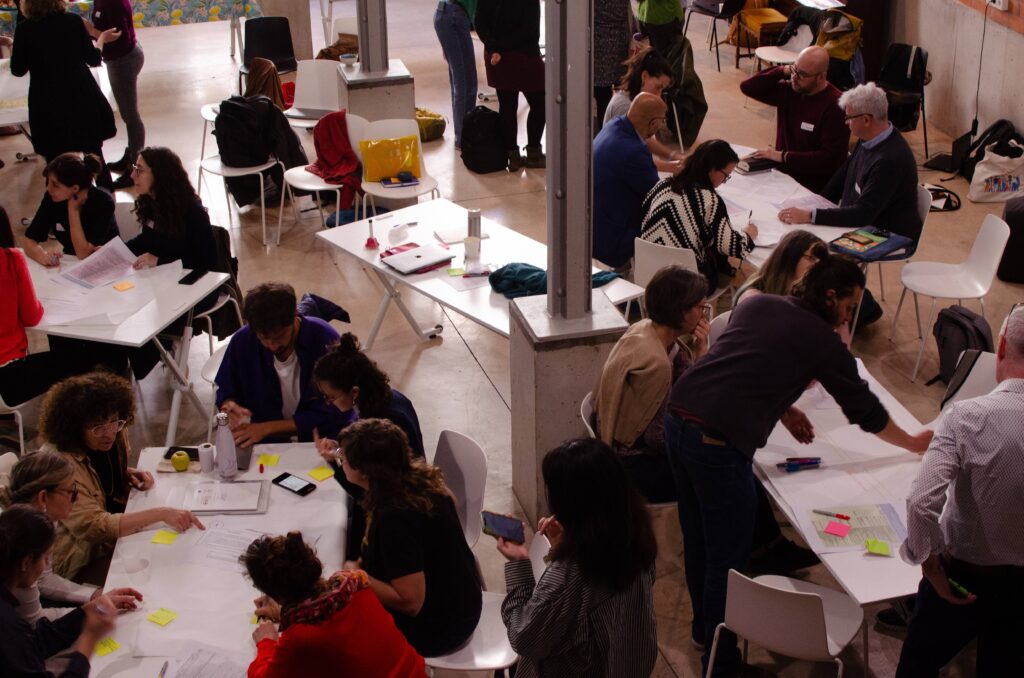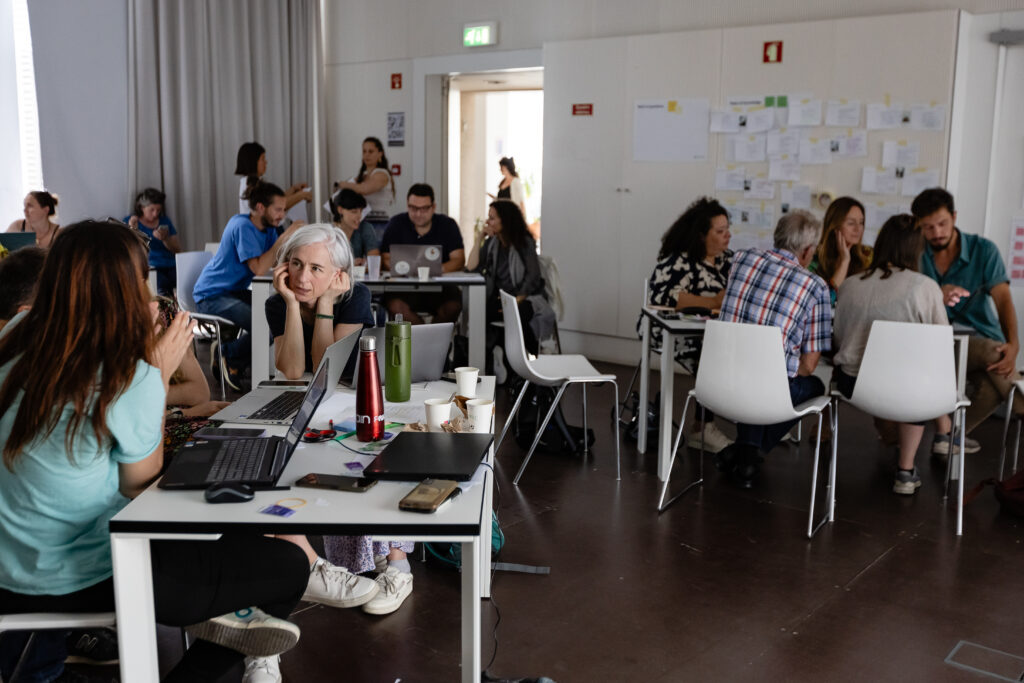
On 13-14 May, Lisbon became a meeting point for researchers, community organisations, and local initiatives working at the intersection of food sharing, sustainability, and urban transformation.
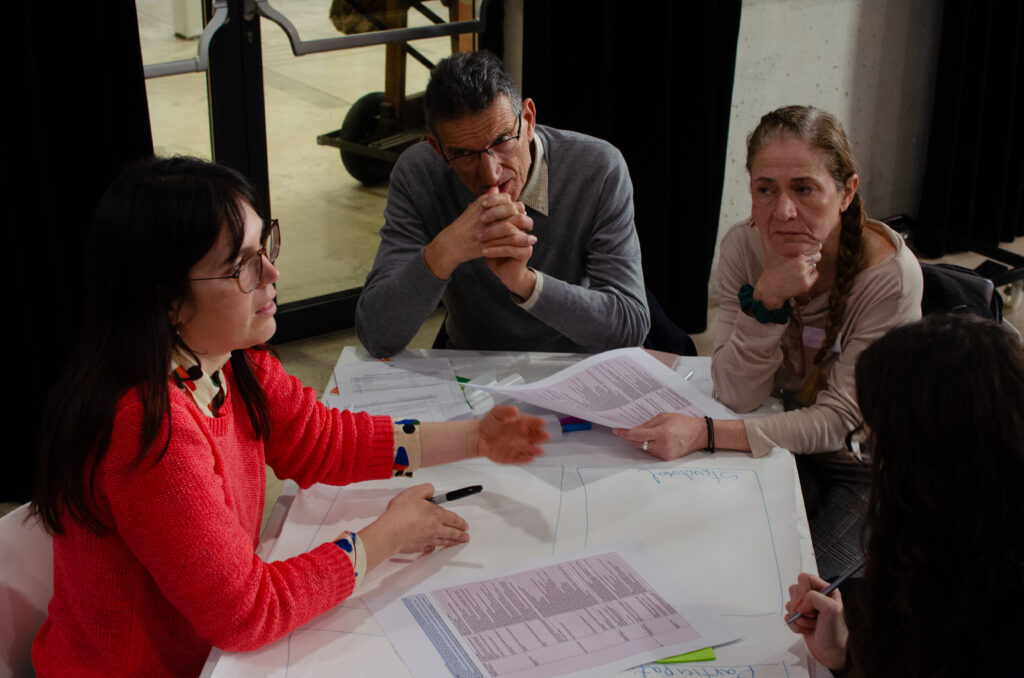
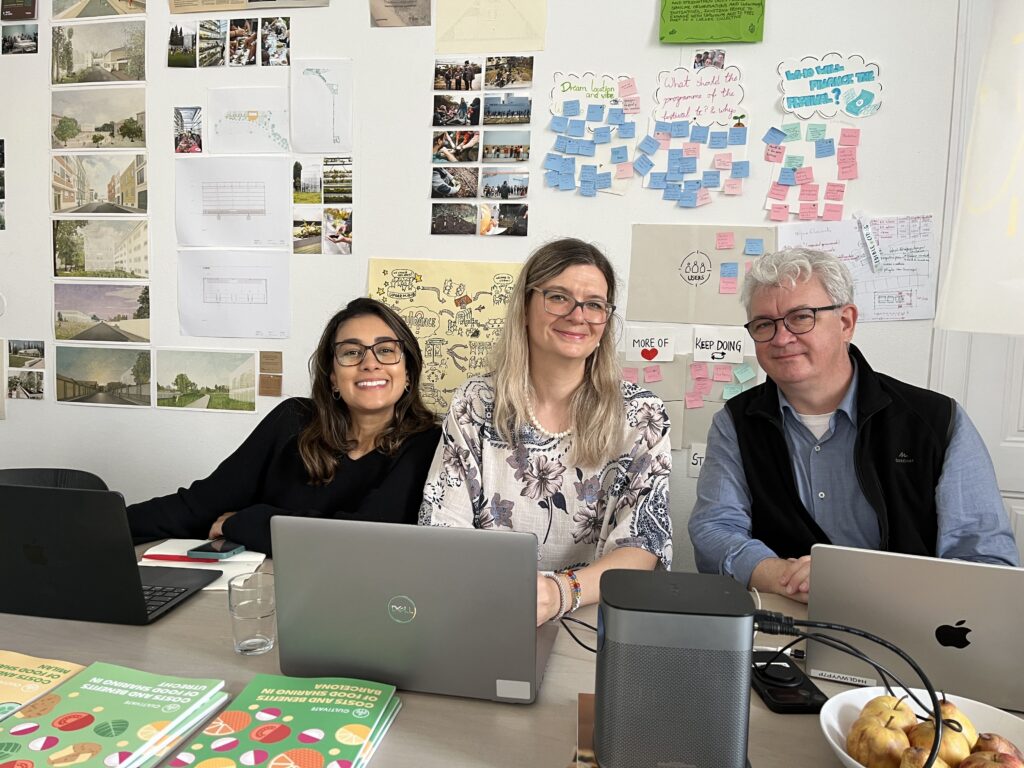
Co-organised by Upfarming and Lund University, the two-day CULTIVATE exchange focused on the replication of the Food Sharing Calculator, a tool developed within the project and designed to help food-sharing initiatives better understand and communicate their social and environmental impact.
The programme combined hands-on training, site visits, and research exchange, offering participants the opportunity to connect impact measurement with the everyday realities of community-led action.
The first day brought participants to two Lisbon-based initiatives: HortaFCUL, a permaculture living lab at the Faculty of Sciences of the University of Lisbon, and Regador, a community association rooted in urban gardening and wellbeing programmes. Visiting these spaces allowed participants to experience first-hand how food sharing can support education, inclusion, mental health, and environmental awareness within local communities.
The day concluded with a visit to Recultivate, an Upfarming initiative based in the Regional Forensic Psychiatry Unit, where therapeutic agriculture, vertical farming, agroforestry, and composting are used to support rehabilitation and social reintegration for people living with severe mental illness.
On the second day, the Lund University team joined colleagues at the Institute of Social Sciences of the University of Lisbon for a research exchange on food systems, sustainability, and urban resilience. The discussions opened new perspectives for collaboration and highlighted the importance of connecting academic research with community-based practice.
The programme ended with a visit to URBEM, a volunteer collective creating native “fast forests” across Lisbon. The visit offered a broader perspective on how food sharing initiatives are part of wider processes of ecological restoration, participation, and community care shaping the future of cities.
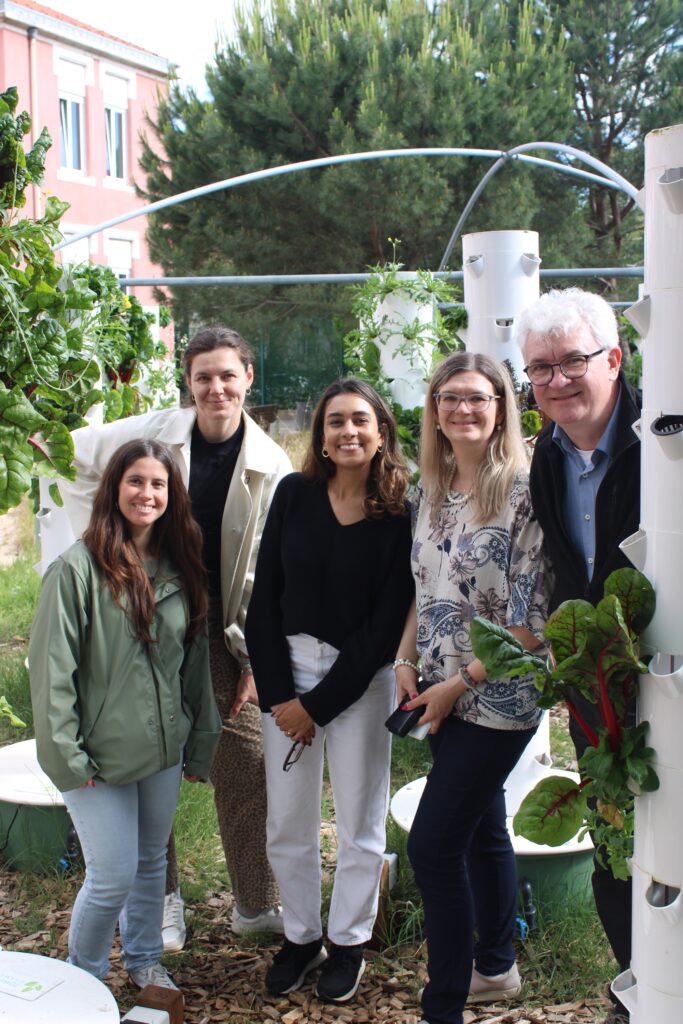
Photo credits: ULUND & Upfarming